
The Art of Marble Mosaic Grout
Part II — Steps 05 & 05A · Installation Guide
Grouting & Grout Selection
Seal before you grout. Marble is porous and must be sealed with STONETECH® Heavy Duty Sealer before grouting begins. Allow to dry fully. Without this step, grout will permanently stain the stone. See Step 04 — Sealing.
Step 05 — Apply Grout
Grouting
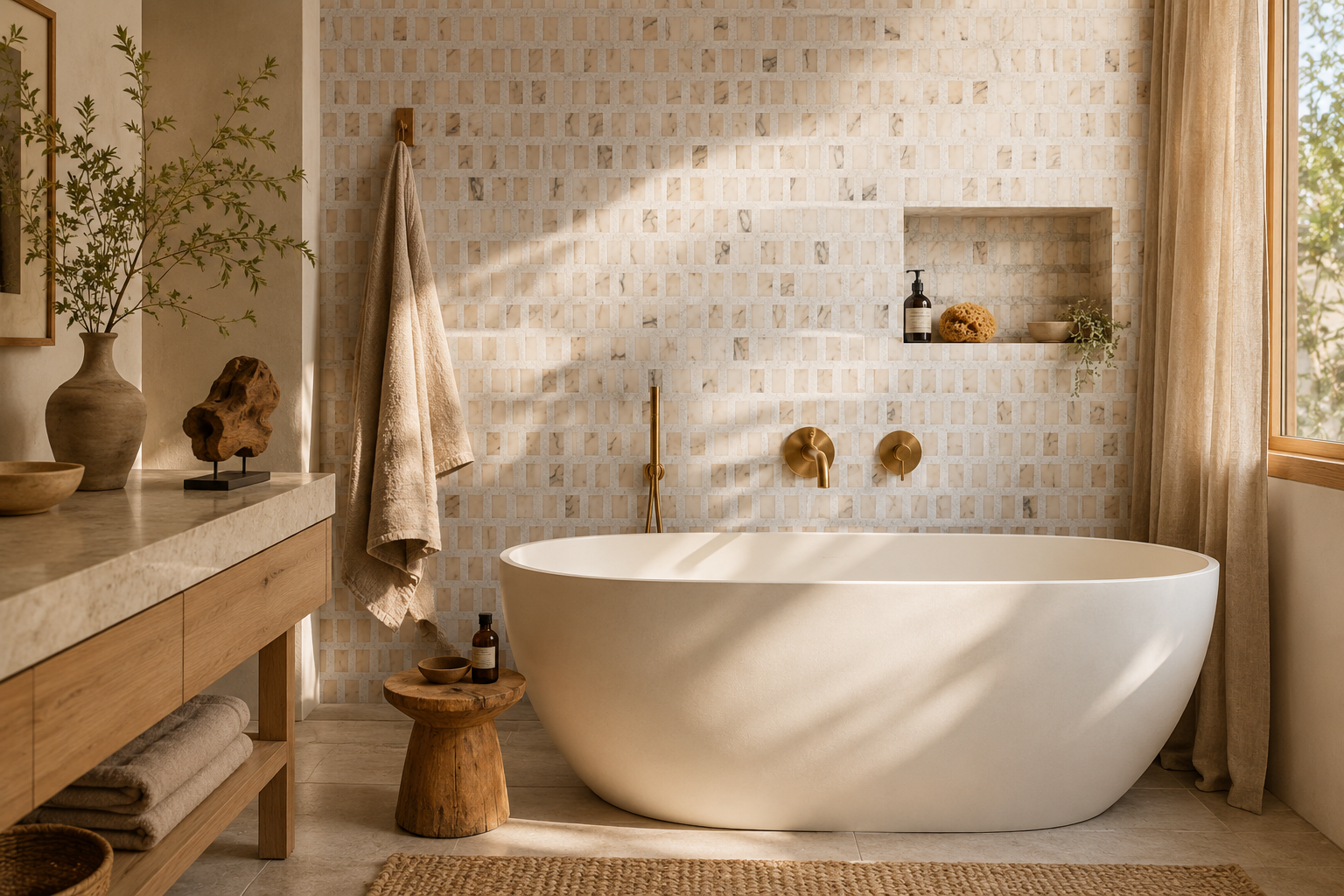
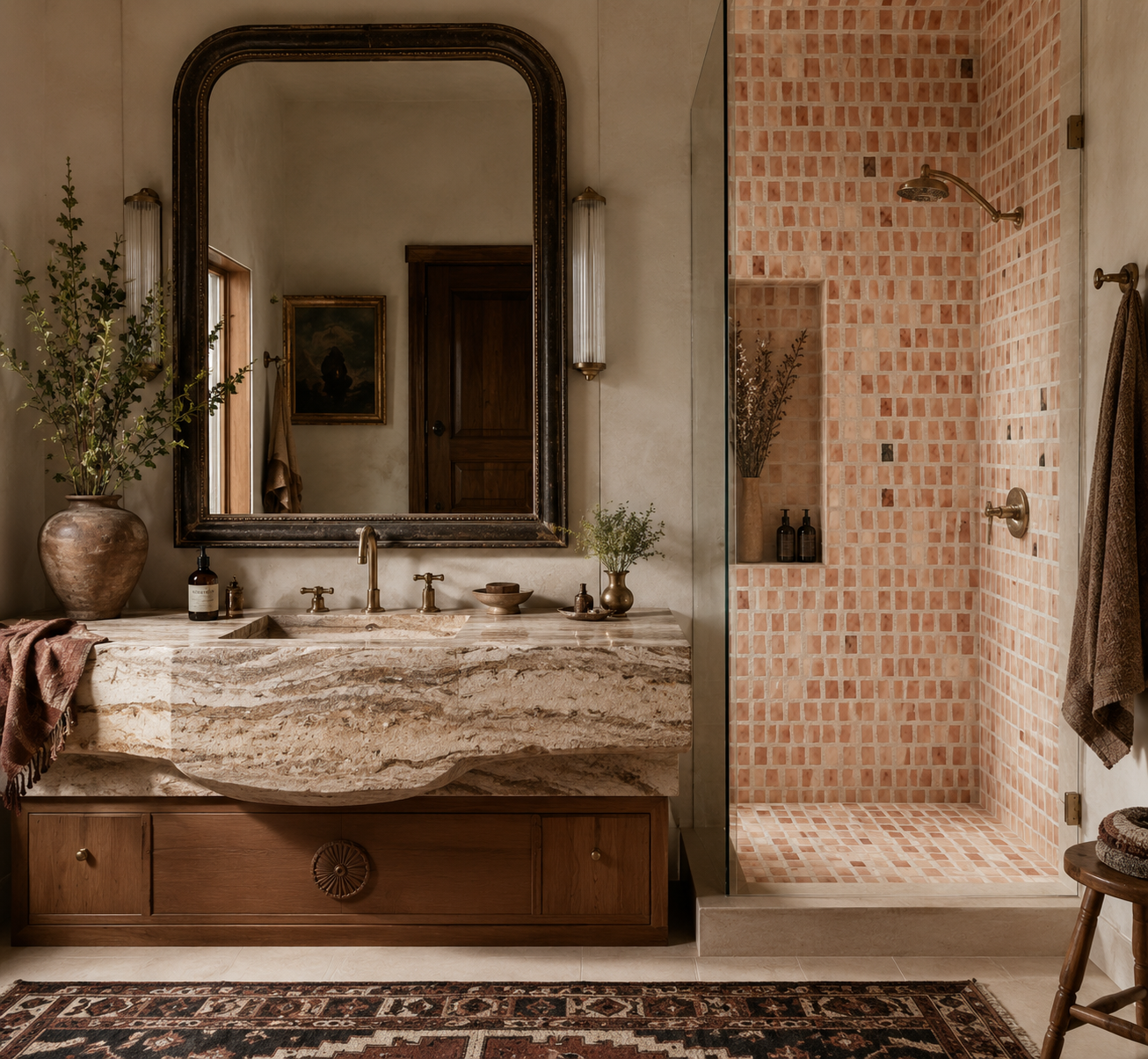
Grouted & Sealed- Floor and Wall InstallationGrouted & Sealed — Bath Floor and Wall Installation
Select & Mix
Use high-performance Sanded Cementitious or Epoxy Grout (see Step 05A for full grout selection guidance). Mix per manufacturer instructions to a smooth, lump-free consistency. Do not over-thin — proper consistency holds a ridge without slumping.
Apply Diagonally in Sections
Apply diagonally across joints with a rubber float, pressing firmly to fill all voids. Work in 3–4 sq ft sections at a time. Diagonal application prevents the float from dragging grout back out of the joint.
Clean at 15–20 Minutes
When grout firms slightly, clean with a damp sponge using light circular motions. Do not pull grout from joints. Rinse sponge frequently. Use a clean bucket of water — milky water re-deposits haze.
Buff Haze After 24 Hours
After 24 hours, buff any remaining haze with a dry cloth or white nylon pad. Do not use abrasive pads on marble.
Grout Haze Warning: Do not allow grout haze to dry on the tile surface. Clean promptly. Dried haze on natural stone may require professional removal and can permanently dull the finish.
Step 05A — Grout Selection Guide
Choosing the Right Grout
The Carlo Scarpa Mosaic's generous joints — a deliberate design decision — make grout a visible compositional element, not mere infill. Your grout choice shapes the final aesthetic as much as the stone itself. Two options are approved for this collection: Traditional SPEC (portland cement + sand) and modern Sanded Grout. Each serves a distinct design intention and client profile.
The Artisan Choice
Traditional SPEC
Portland cement + sand + aggregate
Aesthetic
Matte, irregular, deeply authentic. Mimics the mid-century Italian methods Scarpa himself used. Aggregate can be matched to echo the marble's texture — creating a surface that reads as architecture, not finish.
Best For
Historic, Brutalist, Wabi-Sabi, Organic Modern, or Sprezzatura-style projects. Clients referencing the Olivetti Showroom, Brion Cemetery, or mid-century Italian interiors.
Skill Requirement
High. Requires manual mixing, precise water ratios, and an experienced installer who knows how to clean it off immediately. Dried SPEC on natural stone is extremely difficult to remove without damaging the surface.
Sealing
Requires a separate high-quality penetrating sealer. No built-in water resistance.
Aggregate Option
Small stones or mineral dust can be added to the mix to match the texture and rhythm of the marble tessera — a technique that elevates the surface to a higher level of material unity.
The Safe Choice
Sanded Grout
Polymer-modified cementitious grout
Aesthetic
Uniform, crisp, clean. Modern polymer engineering produces consistent color and a controlled finish. Works beautifully in contemporary residential and high-end commercial applications.
Best For
Modern, residential, or hospitality projects where the client prioritizes easy maintenance and a refined look over raw material authenticity. Cleanroom, spa, and wellness environments.
Skill Requirement
Standard. Pre-formulated and consistent. Forgiving of normal installer variation. Recommended for any project where the tile installer's experience level is uncertain.
Sealing
Many premium sanded grouts include built-in polymer sealers. A separate topical sealer is still recommended for wet areas and floors.
Cleanup
Easier to clean from the tile surface before it sets. Polymer additives extend the working window slightly compared to traditional cement.
The Verdict
For clients referencing Carlo Scarpa's own material world — the Olivetti Showroom, the Brion Cemetery, the Querini Stampalia Foundation — Traditional SPEC with added aggregate is the superior choice. The joint becomes part of the architecture. The surface reads as something that has always been there.
For any project where the client's priority is ease of maintenance, color consistency, or the tile is being installed without a specialist, Sanded Grout is the correct and significantly lower-risk choice. It will look refined, perform reliably, and protect the stone well over time.
Critical note on Traditional SPEC: Because SPEC has no polymer retarder, it sets faster and bonds to stone aggressively. Your installer must clean grout off the tile surface within 10–15 minutes of application — sooner in warm or dry conditions. Have ample clean water, fresh sponges, and an experienced crew ready before beginning. Confirm your installer has worked with traditional cement mortars on natural stone before committing.
